You know that feeling when you’re juggling customer calls, fulfilling orders, managing your books, and trying to post on social media before the day ends? Yeah, you’re doing the work of five people. And honestly? Marketing is probably the first thing that gets bumped when things get hectic.
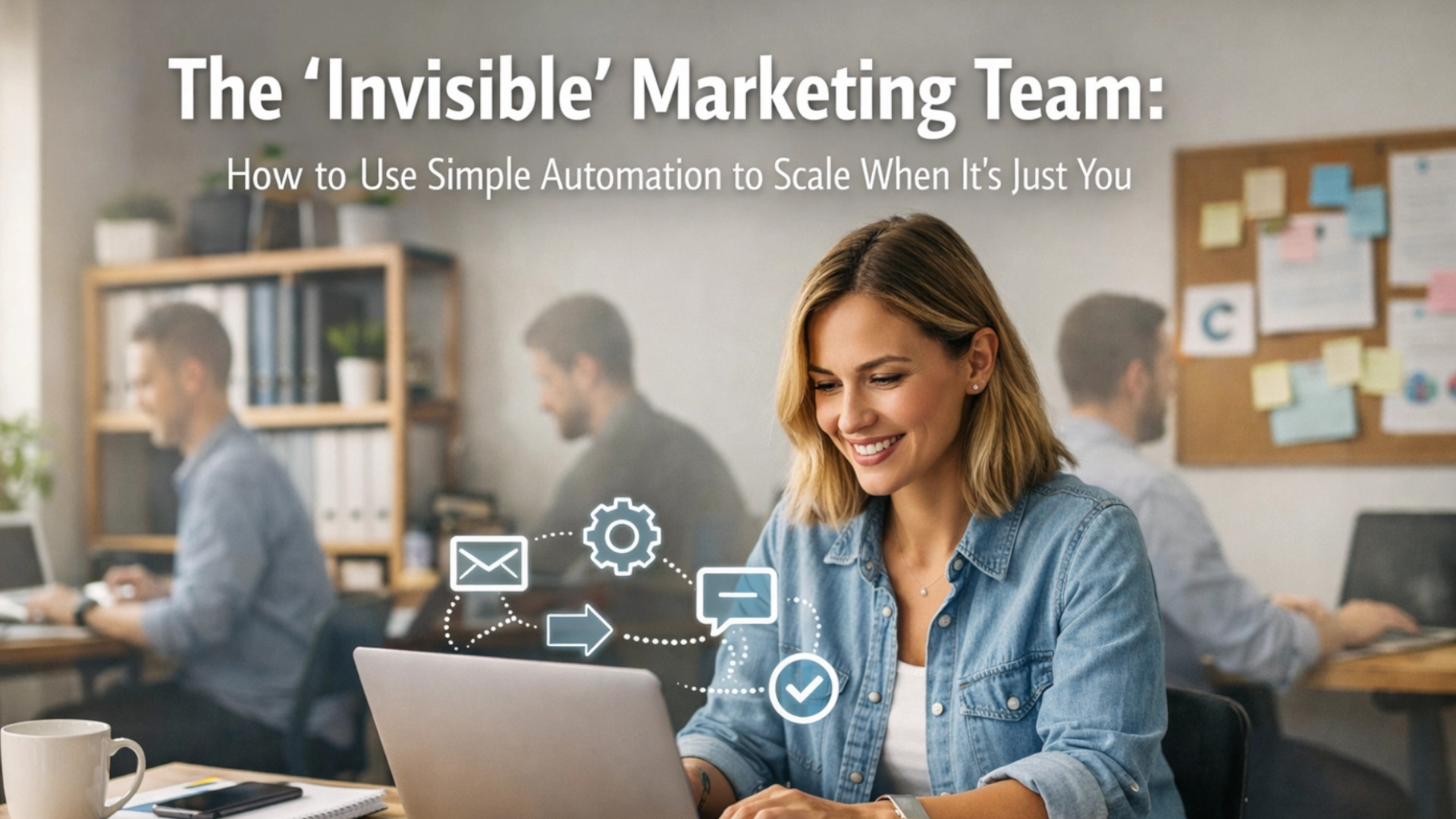
Here’s the thing: you don’t actually need a full marketing team to look like you have one. What you need is an “invisible” marketing team, one built on smart automation that works while you sleep, follows up when you forget, and keeps your brand visible even when you’re buried in the day-to-day.
Let me show you how solopreneurs are using simple automation to punch way above their weight class.
What is “Invisible Marketing” Anyway?
Think of invisible marketing as creating a baseline of constant activity that makes your business look alive, responsive, and professional: without you manually doing every single thing. It’s the difference between scrambling to respond to every inquiry and having systems that automatically handle the repetitive stuff while you focus on what actually moves the needle.
When someone fills out a form on your website at 11 PM, invisible marketing sends them a personalized response immediately. When a customer books an appointment, it sends a confirmation and reminder without you lifting a finger. When someone hasn’t engaged with your business in 90 days, it reaches out to re-engage them.
You appear everywhere. You seem “always on.” But really? You’ve just set up systems that work in the background.

Why This Matters When You’re Flying Solo
Let’s be real: when you’re the CEO, the receptionist, the delivery driver, and the marketing department all rolled into one, consistency becomes nearly impossible. You post on Instagram for three days straight, then radio silence for two weeks because you got slammed with orders. A hot lead emails you, but you don’t see it until three days later when they’ve already gone with a competitor.
Automation turns marketing from a daily scramble into a system that runs whether you’re having a slow Tuesday or the busiest week of your life. It makes your follow-ups instant, your brand presence consistent, and your customer experience polished: all without adding hours to your already packed schedule.
The Core Areas You Should Automate First
Not all automation is created equal. Start with the tasks that consume the most time and offer the least strategic value. Here’s where you’ll get the biggest bang for your buck:
1. Lead Follow-Ups (This One’s Non-Negotiable)
Someone fills out your contact form. Now what? If your answer is “I’ll get back to them when I have a minute,” you’re already losing deals. An automated follow-up sequence triggers the moment someone shows interest: confirming you received their inquiry, setting expectations, and keeping the conversation moving.
This isn’t just convenient. It’s competitive. While you’re sleeping, your automated sequence is nurturing leads and preventing them from wandering over to competitors who respond faster.
2. Social Media Posting
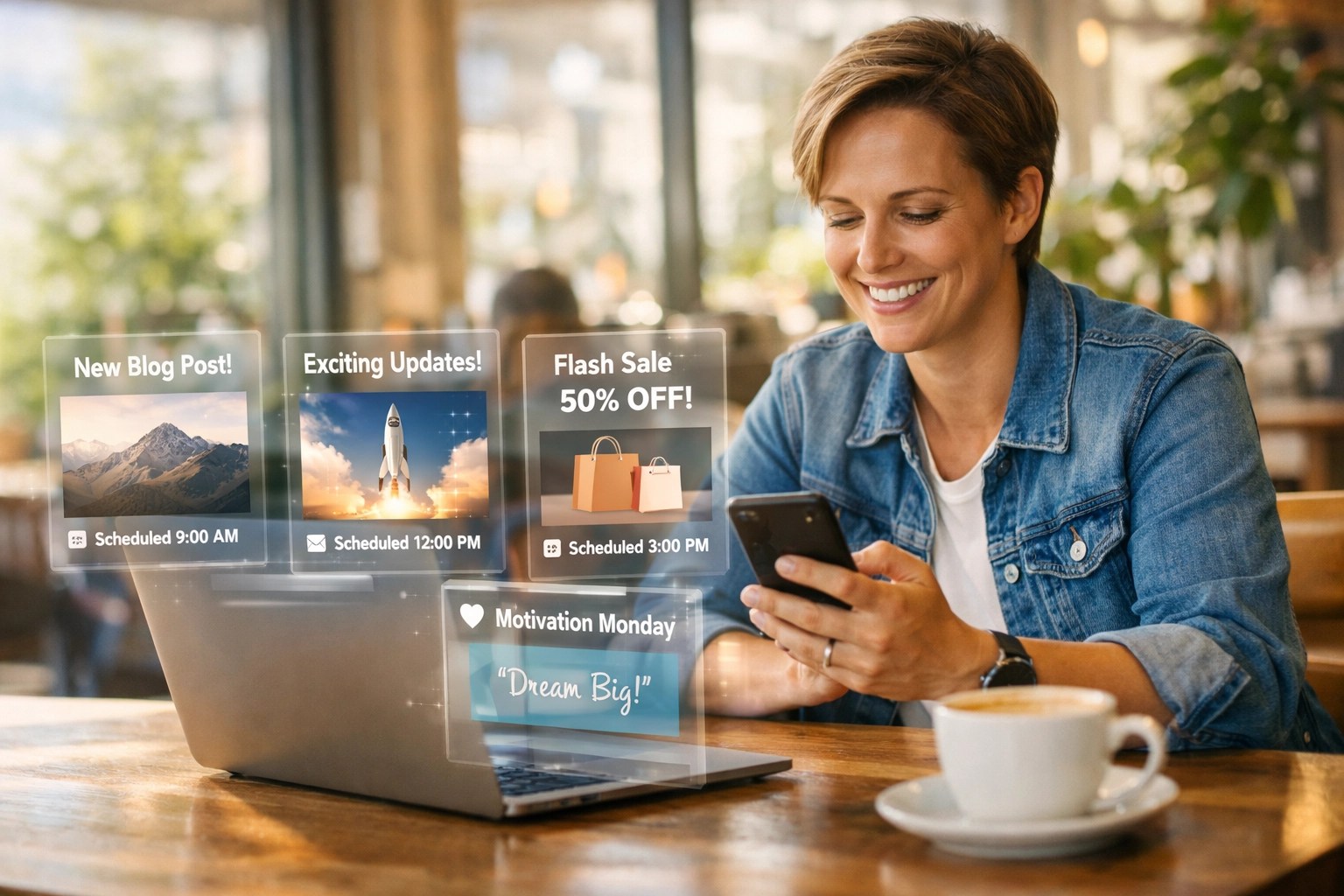
You don’t need to be online every single day if you batch-create content and schedule it ahead of time. Spend one afternoon per month creating posts, then let automation handle the distribution. Your audience sees consistent activity. You reclaim hours every week.
The shift here is mental: you go from daily poster to strategic planner. And honestly? That’s a much better use of your brain.
3. Appointment Reminders and Confirmations
Every reminder you send is a brand touchpoint that reinforces professionalism and prevents costly no-shows. When automated, these maintain a stellar customer experience without eating up your time. Plus, customers appreciate the proactive communication: it makes you look organized and on top of your game.
4. Review and Reputation Management
Getting reviews is critical for visibility, especially when you lack a marketing team to amplify your brand. But asking for reviews manually? That’s awkward and inconsistent. Automation can systematically prompt happy customers to leave reviews after a purchase or service completion, turning one-time transactions into long-term reputation builders.
5. Post-Purchase Engagement
The sale isn’t the finish line: it’s the starting line for a long-term relationship. Automated workflows can send refill reminders, complementary product suggestions, or simple check-ins based on usage intervals. This keeps customers engaged and coming back without you manually tracking every purchase date.
6. Re-Engagement Campaigns
Instead of manually combing through your customer list to find who’s gone quiet, automation reaches out after set periods of inactivity. A simple “We miss you” message with a special offer can bring dormant customers back into the fold: revenue you would’ve left on the table otherwise.

How to Make Automation Feel Personal (Not Robotic)
Here’s where most people screw this up: they set up generic, one-size-fits-all automation that feels like spam. The secret to effective automation is making it feel like personalized service.
Timing is everything. Don’t blast messages at the same time for everyone. Analyze when individual customers typically engage and send at their optimal times. Someone who opens emails at 6 AM gets theirs at 6 AM. Someone who shops at 9 PM gets theirs at 9 PM.
Use behavioral triggers, not batch schedules. Connect automation to real customer actions rather than arbitrary dates. When someone abandons a cart, that’s your trigger. When someone downloads a resource, that’s your trigger. This makes outreach feel timely and relevant instead of random.
Segment like your business depends on it. Because it does. Group customers by behavior patterns: discount seekers get different messaging than loyal repeat buyers. First-time visitors get a different sequence than returning customers. The more targeted your automation, the more personal it feels.
Know when to stop. Automation should work quietly in the background, not bombard people with excessive messaging. If someone doesn’t engage after three emails, move them to a different list or give them space. Respect goes a long way.
Your Implementation Game Plan
Don’t try to automate everything at once. That’s a recipe for overwhelm and abandoned projects. Instead, roll it out in phases:
Phase 1: Start with automated follow-ups triggered by customer actions: form submissions, bookings, inquiries. This gives you immediate ROI because it directly closes the gap between customer interest and action.
Phase 2: Add social media scheduling to maintain consistent visibility without daily effort. Batch-create content once a month and let it run on autopilot.
Phase 3: Build predictive automation that segments customers and tailors messaging based on behavior patterns. This is where things start feeling really sophisticated and your “invisible team” looks downright impressive.
The Tools You Actually Need
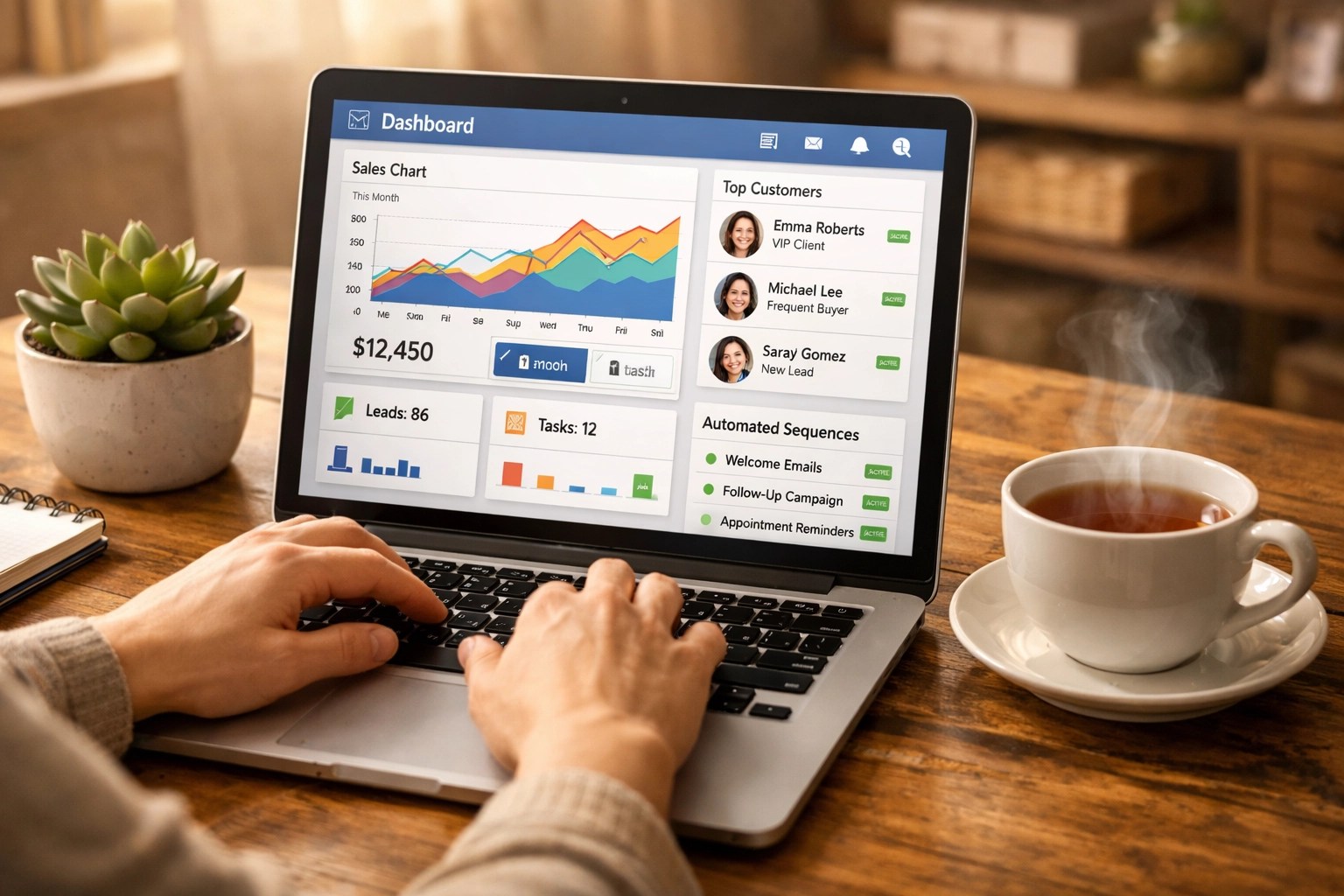
You don’t need an enterprise tech stack to make this work. Most solopreneurs can get started with:
- An email marketing platform with automation features (think Mailchimp, ConvertKit, or ActiveCampaign)
- A social media scheduler (Buffer, Hootsuite, or Later)
- A CRM that tracks customer interactions and triggers workflows (HubSpot, Zoho, or even a well-organized spreadsheet to start)
Start simple. Master one tool. Then layer in the next. Complexity is the enemy of execution.
The Bottom Line
You’re not trying to replace the human touch with robots. You’re trying to free yourself from repetitive tasks so you can focus on the high-value work only you can do: the strategy, the creativity, the relationship-building that actually grows your business.
When done right, automation creates the illusion that your brand is everywhere, listening, and responding: while you focus on delivering the actual value your customers need. You’ll appear bigger, more organized, and more responsive than competitors who are still doing everything manually.
And the best part? You’re not working harder. You’re working smarter. Your invisible marketing team never sleeps, never takes a day off, and never forgets to follow up.
Ready to build your team? Check out the upcoming events at INSPIREsmall.biz to connect with other solopreneurs who are scaling smart, not just working hard.
Now go automate something. Your future self will thank you.