Have you ever looked at your bank account at the end of a record-breaking sales month and wondered, “Wait, where did all the money go?” Do you ever feel a twinge of guilt when you send an invoice, or worse, a wave of anxiety that if you raised your rates by even 5%, your clients would vanish into thin air?
If you’re nodding your head, you’re not alone. In fact, you’re likely caught in the “Pricing Trap.” It’s that frustrating place where you’re working harder than ever, but your profit margins are thinner than a sheet of tracing paper.
Well, here’s some good news for you: pricing isn’t just about math; it’s about psychology, positioning, and having the courage to charge what you’re actually worth. Today, we’re going to break down why so many small business owners leave money on the table and how you can flip the script to build a more sustainable, profitable business.
TLDR: The Quick Profit Boost
- The Mistake: Most owners use “Cost-Plus” pricing but forget to include hidden overhead (software, taxes, admin time).
- The Trap: Copying your competitors’ prices means you’re inheriting their potentially broken business models.
- The Fix: Shift toward Value-Based Pricing. Stop charging for your time and start charging for the results you provide.
- Next Step: Audit your costs this week and identify one “premium” offer you can price based on the outcome, not the hours.
The “Cost-Plus” Illusion: Why Your Math Might Be Lying to You
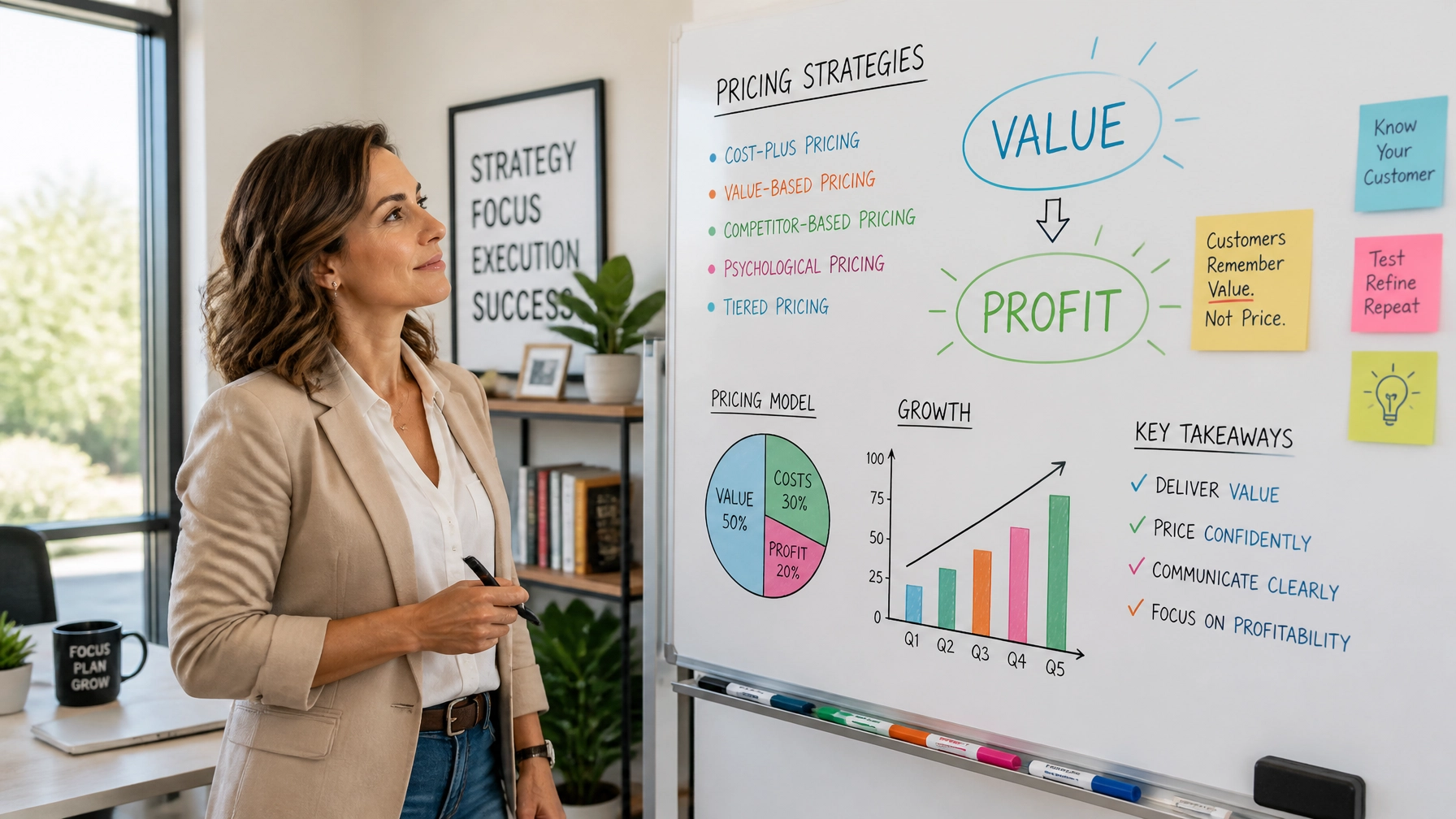
Most of us start pricing our services using a simple formula: My Costs + A Little Bit Extra = My Price. It sounds logical, right? It’s called “Cost-Plus” pricing, and while it feels safe, it’s often the biggest hole in a small business’s bucket.
The problem is that we’re usually terrible at calculating our true costs. Sure, you know what the materials cost or what your hourly rate for a contractor is. But are you factorng in your monthly software subscriptions? Your self-employment taxes? The three hours you spent on “admin” that you didn’t bill anyone for?
When you underestimate your costs, that “plus” part of the formula, your actual profit, starts to disappear. Before you know it, you’re basically paying your clients for the privilege of working for them.
Pro-Tip: Your costs should be your floor, never your ceiling. If you aren’t sure where to start, check out our Business Growth Resources to help you get a handle on your numbers.

Stop Being a “Competitor Copycat”
When you’re starting out, it’s tempting to look at the person down the street and say, “Well, they charge $100, so I’ll charge $95.”
But here’s the thing: you have no idea what their business looks like behind the scenes. Maybe they own their building and have zero rent. Maybe they’re drowning in debt and about to go out of business. Maybe they’re just guessing, too!
When you price based solely on your competition, you’re telling the world that you’re a commodity. You’re saying the only difference between you and them is five bucks. Is that really the brand you want to build?
Instead of looking outward, look inward. What makes your approach unique? Do you offer faster turnaround? More personalized service? A specific expertise that no one else in your networking group has? That’s where your real value lives.
The Shift: Pricing for Outcomes, Not Hours
If I told you I could save you 20 hours a week, would it matter if it took me 10 minutes or 10 hours to do it?
Of course not. You’re paying for the 20 hours of freedom, not my time behind a keyboard. This is the heart of Value-Based Pricing.
When you charge by the hour, you’re actually incentivized to be slower. The better and faster you get at your job, the less money you make. That’s a terrible way to run a business! Instead, ask yourself: “What is the economic impact of the problem I am solving for my client?”
If you’re a bookkeeper saving a client $5,000 in tax penalties, your service is worth a lot more than a $50 hourly rate. When you focus on the outcome, the price becomes an investment for the client rather than an expense.

The Psychology of the Price Tag
Did you know that your price is actually a marketing tool? It’s a signal to your customers about the quality of what you offer.
If you see a sushi restaurant offering “All You Can Eat” for $5.99, you aren’t thinking, “What a bargain!” You’re probably thinking, “I am going to get food poisoning.”
Low prices often attract “high-maintenance” clients: the ones who demand the most time and provide the most stress. On the flip side, premium pricing tends to attract clients who respect your expertise and are easier to work with. Don’t be afraid to be the “expensive” option in your niche. As long as you deliver the value to back it up, your ideal clients will be happy to pay for the peace of mind.
Your 3-Step Pricing Audit
Ready to stop leaving money on the table? Here is a quick audit you can do this week to get your pricing back on track:
- Calculate Your “Real” Hourly Burden: Take your total monthly expenses (including your desired salary and taxes) and divide it by the number of billable hours you actually work. You might be surprised to find your “cost” is much higher than you thought.
- Identify Your “Value Drivers”: Ask your best clients why they work with you. Is it your reliability? Your specialized knowledge? Use those answers to justify a value-based rate for new projects.
- The 10% Test: Try raising your rates by just 10% for the next three leads that come your way. Most of the time, you won’t hear a single objection, and that 10% goes straight to your bottom line.

You Don’t Have to Do It Alone
Pricing can feel like a lonely mountain to climb, but it doesn’t have to be. Sometimes, all you need is a fresh perspective from fellow entrepreneurs who have been exactly where you are.
At INSPIREsmall.biz, we’re all about helping you do more with less. Whether you’re looking for hands-on training or just want to connect with a community that actually wants you to succeed, we’ve got your back.
Why not join us for one of our upcoming networking events? It’s a great place to bounce your pricing ideas off other pros and find the confidence to finally charge what you’re worth.
Also, keep in mind: your business is a work in progress. You don’t have to get your pricing perfect today. You just have to make it better than it was yesterday. You’ve got this!