
Late payments rarely begin with one dramatic event. More often, they start with a vague quote, an invoice sent several days too late, or a payment term that says “Net 30” without anyone stopping to ask what that actually means.
Then the due date passes.
You send a gentle email. You wait. You send another one. Meanwhile, the work continues, your calendar fills up, and your bank account starts doing nervous math.
The good news? You don’t need a complicated accounts-receivable department to improve your cash flow. As a solo owner, you can set up a simple payment system in one afternoon: one that makes expectations clear before the work starts and follow-up routine when payment is late.
This article will help you:
- Set clearer quotes and deposits
- Choose invoice terms that don’t invite delay
- Build a simple reminder cadence
- Follow up without sounding uncomfortable or confrontational
- Know when to pause work
- Move chronic late payers to prepayment
In other words: grow your business, streamline your cash flow, and sidestep the late-payment spiral.
Start with the agreement, not the invoice
An invoice can’t fix unclear expectations.
Before you begin a project, your client should know:
- What you’re delivering
- How much it costs
- When payment is due
- Whether a deposit is required
- What happens if the project changes
- What happens if payment is late
- Which payment methods you accept
Put those details in your proposal, agreement, or statement of work. Then repeat the most important information on the invoice.
This isn’t about being suspicious of your clients. It’s about making the relationship easier for everyone. Clear terms reduce confusion, prevent “I thought you meant…” conversations, and give you something factual to refer back to later.
Use quotes that make payment expectations visible
A quote should include more than a total price. Add a short payment section such as:
Payment terms: A 50% deposit is due before work begins. The remaining balance is due within 14 calendar days of final delivery. Work outside the agreed scope will be quoted separately.
If you don’t require a deposit, you might say:
Payment terms: Payment is due within 14 calendar days of invoice date. Work will be scheduled once the quote is approved.
Keep your wording direct. Avoid phrases like:
- “Payment at your earliest convenience”
- “Please pay promptly”
- “Terms to be discussed”
- “Net 30,” with no actual due date
Those phrases sound polite, but they leave room for interpretation. A specific date is much clearer.
Choose a deposit that protects the work
Deposits help you avoid investing significant time, money, or creative energy before a client has demonstrated commitment.
For many custom projects, a deposit between 25% and 50% may be appropriate. The right amount depends on your industry, project size, expenses, and relationship with the client.
A deposit can help cover:
- Materials or subcontractors
- Initial research and planning
- Reserved calendar time
- Custom designs or development
- The risk of a project being canceled after work begins
For larger projects, consider breaking the work into milestones:
- 30% deposit to begin
- 40% at the midpoint
- 30% before final delivery
You don’t have to wait until the very end to discover that the project consumed your entire month and your payment is still “in process.”

Deposit language you can adapt
A 50% deposit is required to reserve project time and begin work. The remaining balance is due within 14 calendar days of completion. Work outside the agreed scope requires written approval and may require an additional deposit.
Make sure your agreement explains whether the deposit is refundable, what happens if the client cancels, and how changes affect the timeline. Requirements can vary by location and industry, so review your language with a qualified attorney when appropriate.
Make your invoice easy to approve and easy to pay
A good invoice answers questions before they become delays.
Include:
- Your business name and contact information
- Client name and billing contact
- Invoice number
- Invoice date
- Clear description of the work
- Amount due
- Deposit or previous payments credited
- Exact calendar due date
- Accepted payment methods
- Payment link or instructions
- Late-payment terms, if applicable
Instead of writing:
Net 30
Write:
Payment due: October 25, 2026
You can include both:
Payment terms: Net 14. Payment due October 25, 2026.
Shorter terms, such as Due Upon Receipt, Net 7, or Net 14, may be easier for a solo business to manage than Net 30 or Net 60. Longer terms may be common in some B2B industries, but they can create real pressure when you’re funding the work yourself.
Payment terms should match your actual business needs. A client’s large-company process shouldn’t automatically become your small-business cash-flow problem.
Research from Stripe’s payment-terms guide and Xero’s invoicing guidance also emphasizes the value of clear due dates, convenient payment methods, and written expectations.
Set up a reminder cadence once, and reuse it
Following up feels awkward when you decide what to say from scratch every time. A standard cadence turns it into a normal business process.
Here’s a simple schedule:
When you send the invoice
Send a short note that includes the amount, due date, and payment link.
Hi [Name],
Thanks again for the opportunity to work together. I’ve attached invoice #[number] for [project/service]. The total due is [amount], and payment is due on [date].
You can pay here: [payment link]. Please let me know if you have any questions.
Thanks,
[Your name]
Three to five days before the due date
Assume the client is busy, not malicious. A reminder before the due date gives them time to route the invoice through their process.
Hi [Name],
Just a quick reminder that invoice #[number] for [amount] is due on [date]. Here’s the payment link for convenience: [link].
Thanks, and please let me know if anything is needed from me.
Best,
[Your name]
On the due date
Keep it factual and brief.
Hi [Name],
Invoice #[number] for [amount] is due today. You can make payment here: [link].
Thank you,
[Your name]
Three to seven days late
Now it’s time to be more direct. Don’t bury the request under several paragraphs of apology.
Hi [Name],
I’m following up on invoice #[number] for [amount], which was due on [date] and is now [number] days overdue.
Please arrange payment by [new date] using this link: [link]. If payment has already been sent, please let me know so I can update my records.
If there’s an issue with the invoice, reply here and I’ll be happy to review it.
Best,
[Your name]
A consistent cadence is easier to manage with invoicing or accounting software. Even a recurring calendar task is better than relying on memory.
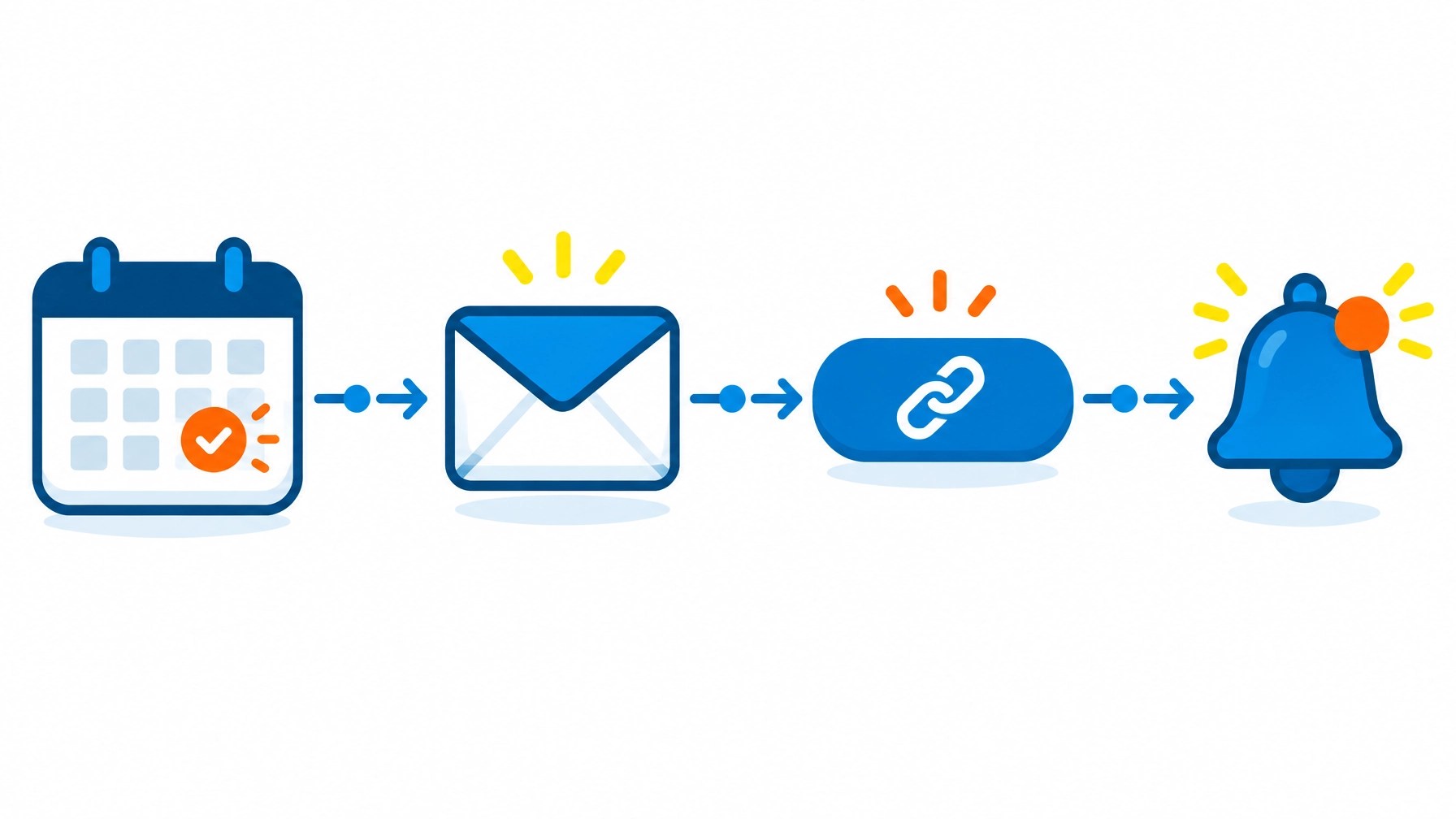
The follow-up isn’t awkward. Unclear expectations are
You’re not asking for a favor. You’re asking for payment for work that was agreed to and completed.
The most effective follow-ups are:
- Specific
- Short
- Calm
- Professional
- Attached to the original invoice
- Clear about the next step
Avoid emotional language such as:
- “I’m sorry to bother you…”
- “I hate to keep asking…”
- “I know you’re probably very busy…”
- “Whenever you get a chance…”
Those phrases make a normal business process sound like an unreasonable personal request.
A better approach is warm but confident:
“I’m following up on the outstanding balance and would appreciate payment by Friday.”
You can be kind without becoming vague.
Know when to pause work
If a client hasn’t paid an overdue invoice, continuing to deliver more work increases your exposure.
Your agreement should explain what happens when payment is late. For example:
Work may be paused if an invoice remains unpaid after the due date. Project timelines will be adjusted based on the date payment is received.
When it’s time to pause, say so plainly:
Hi [Name],
Invoice #[number] is still outstanding and was due on [date]. Until the balance is paid, I’ll need to pause additional work on the project.
Once payment is received, I’ll confirm the updated schedule and next steps. Please let me know if there’s an issue with the invoice that needs to be resolved.
Thank you,
[Your name]
Pausing work isn’t punishment. It’s a boundary that protects your time and keeps the project financially workable.
If your contract includes late fees, apply them consistently and only when they’re clearly stated and allowed under applicable law. The U.S. Small Business Administration’s invoice guidance is a useful starting point, but legal and contract requirements can vary.
Move chronic late payers to prepayment
Some clients are occasionally late. Others have made late payment part of their business model.
If a client repeatedly pays late, change the terms instead of repeating the same reminder cycle forever.
You might move them to:
- 100% payment before work begins
- A larger deposit
- Weekly or milestone billing
- A card-on-file arrangement
- A shorter payment window
- A prepaid service package
Use language like this:
Because several recent invoices have been paid after the agreed due date, future projects will be scheduled on a prepayment basis. Work will be reserved once payment is received.
You can still value the relationship while changing the financial arrangement. Trust doesn’t require unlimited credit.

Your one-afternoon payment system
Set aside a few focused hours and create these six pieces:
- A quote template with deposit and scope language
- A standard agreement with payment terms and pause-work language
- An invoice template with an exact due-date field
- A payment link or clearly documented payment instructions
- Three reminder templates for before, on, and after the due date
- A weekly accounts-receivable check for unpaid invoices
Then choose terms you can actually enforce.
You don’t need to become aggressive. You don’t need to send intimidating legal notices. You need a clear process that begins before the project starts and continues until the invoice is paid.
That’s how you protect cash flow while protecting relationships: set expectations, make payment easy, follow up consistently, and adjust terms when a pattern becomes clear.
A healthier payment system gives you more than money in the bank. It gives you room to serve clients well, plan ahead, and build the business you’re working so hard to create.
Start with one quote, one invoice, and one follow-up template today. Small systems create big breathing room.